1 chapter~1K wordsUpdated Jun 28, 2026
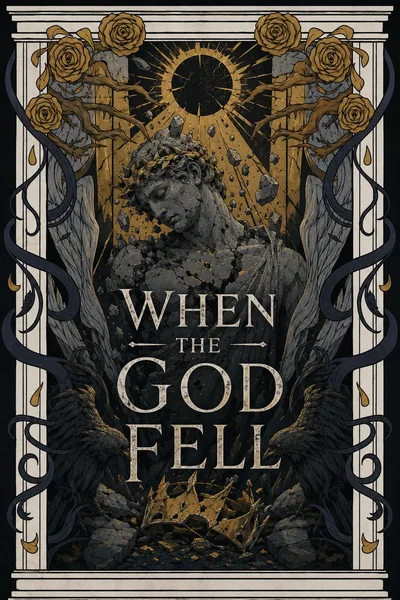
When the God Fell
by rynzo
Track this book
Add or move this book between your shelves, and mark it read with a date.
Ratings
Be the first to rate this book.
About
In this world, gods are not worshipped as distant creators but serve as mechanisms of reality itself. They do not merely rule existence; they correct it. When something deviates from what is deemed acceptable, it is not destroyed but rewritten. Entire cities can be erased from history while leaving behind faint, unstable memories in the minds of those who remain. People do not always die. Sometimes they are simply removed from ever having existed in a coherent form. For centuries, this system of divine correction has maintained absolute order. Nothing is allowed to persist unless it aligns with the gods’ version of truth. Then the system begins to fail. At first, the errors are small and almost dismissible. Shared memories no longer match between individuals. Locations exist in contradictory states. Religious prayers return unanswered not in silence, but in inconsistency. Soon, entire regions begin to overlap with conflicting histories, as if reality itself can no longer maintain a single version of events. The gods, once absolute, begin to show instability. Amid this unraveling exists Serath, a man who should not persist. His village was not destroyed by war or disaster, but removed from existence through divine correction. Yet Serath remains, carrying memories of people and places the world insists never existed. To the gods, he is an anomaly. To himself, he is the last witness of a truth reality has tried to erase. As divine corrections grow increasingly unstable, Serath discovers a deeper truth: the gods are not eternal beings, but systems designed to enforce coherence upon reality. Those systems are now breaking. Corrections contradict one another. Entire regions become layered with incompatible versions of existence. Even divinity begins to fracture under the weight of its own inconsistencies. Serath’s journey leads him into the Elyrian domain, where divinity is revealed not as sacred perfection, but as collapsing structure. Every step deeper destabilizes reality further, as existence struggles to determine which version of Serath is permitted to remain. What begins as survival evolves into confrontation. Serath does not merely resist the gods; he challenges the principle that defines existence in this world—that truth is whatever the gods decide it must be. His very presence forces that principle into contradiction, accelerating the collapse already underway. When Serath finally reaches the origin of divine correction, the conflict is not a traditional battle, but a collapse of reality under incompatible truths. Every action destabilizes existence further, forcing the gods to attempt correction that only deepens the fracture. Serath does not survive the confrontation. But his death does not restore order. It finalizes failure. The gods cannot resolve the contradiction he introduced. Divine correction itself becomes unstable, unable to determine which version of reality should persist. What remains is not peace or destruction, but a fractured world where coherence has permanently broken down. In the aftermath, reality no longer fully agrees with itself. The gods still exist, but their authority is no longer absolute. And from this failure emerges the first irreversible myth: that even correction can break when faced with a truth it cannot rewrite.
Tags
Editions & translations
Similar books
Similar in theme & style
Glitch
february
The Last Heir of the Twelve Gods
primusly
Fallen Gods: Age of False Gods
styantzy
Shares:Martial Arts
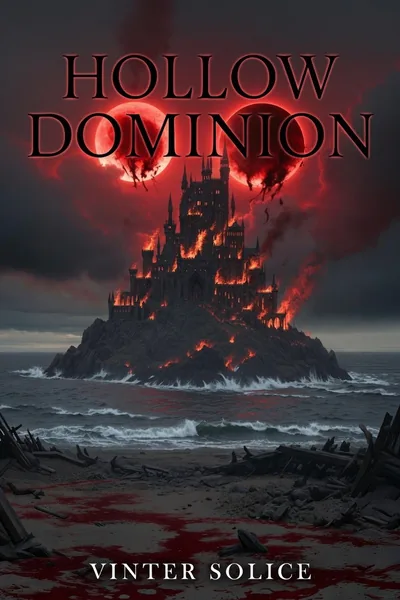
Hollow Dominion
vinter solice
Shares:Martial ArtsOverpowered Protagonist
the unchosen one's Return: History
unpack_gift
Shares:Overpowered Protagonist
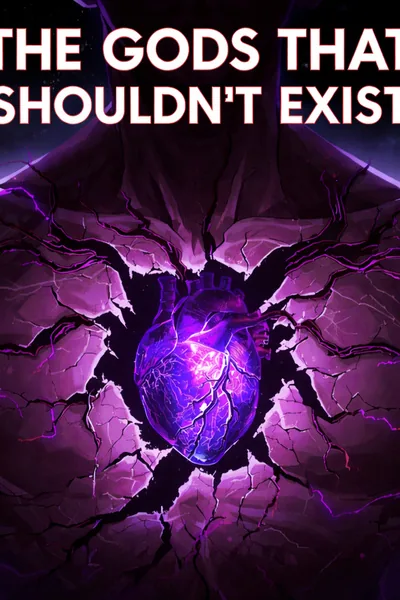
The Gods That Shouldn't Exist
mr_dj_6029
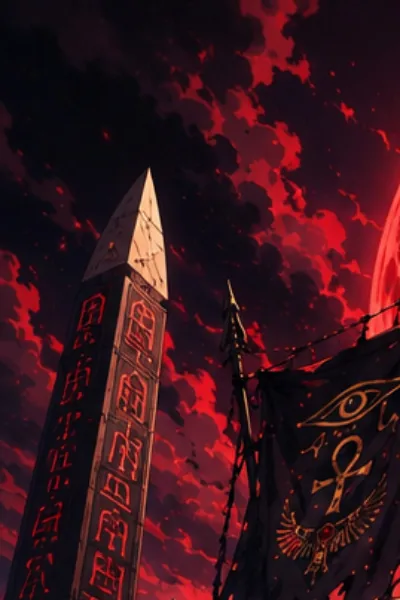
Xenon : Rise of the reaper
sketch dreams
Void Cultivation
lonesome_fellow
The Temporal Ruin
jeredhorn
Shares:Overpowered Protagonist
Heaven Rebel
shinwoo03
Shares:Martial Arts
The Transmigration Before Death
guiltia_0064
Nolan: The Birth of a God
0kejo0
Ready to start reading?
Open it on the original platform, or add it to your shelf to track your progress.